Is Migsun Delta Street Worth Considering for Commercial Investment?
Commercial real estate continues to attract investors who are looking beyond traditional residential properties. While residential investments often focus on long-term appreciation and rental income, commercial assets offer the potential for higher yields, business-driven demand, and stronger cash flow opportunities. However, not every commercial project delivers the same results. Location, accessibility, surrounding development, and future growth prospects all play a significant role in determining investment performance.
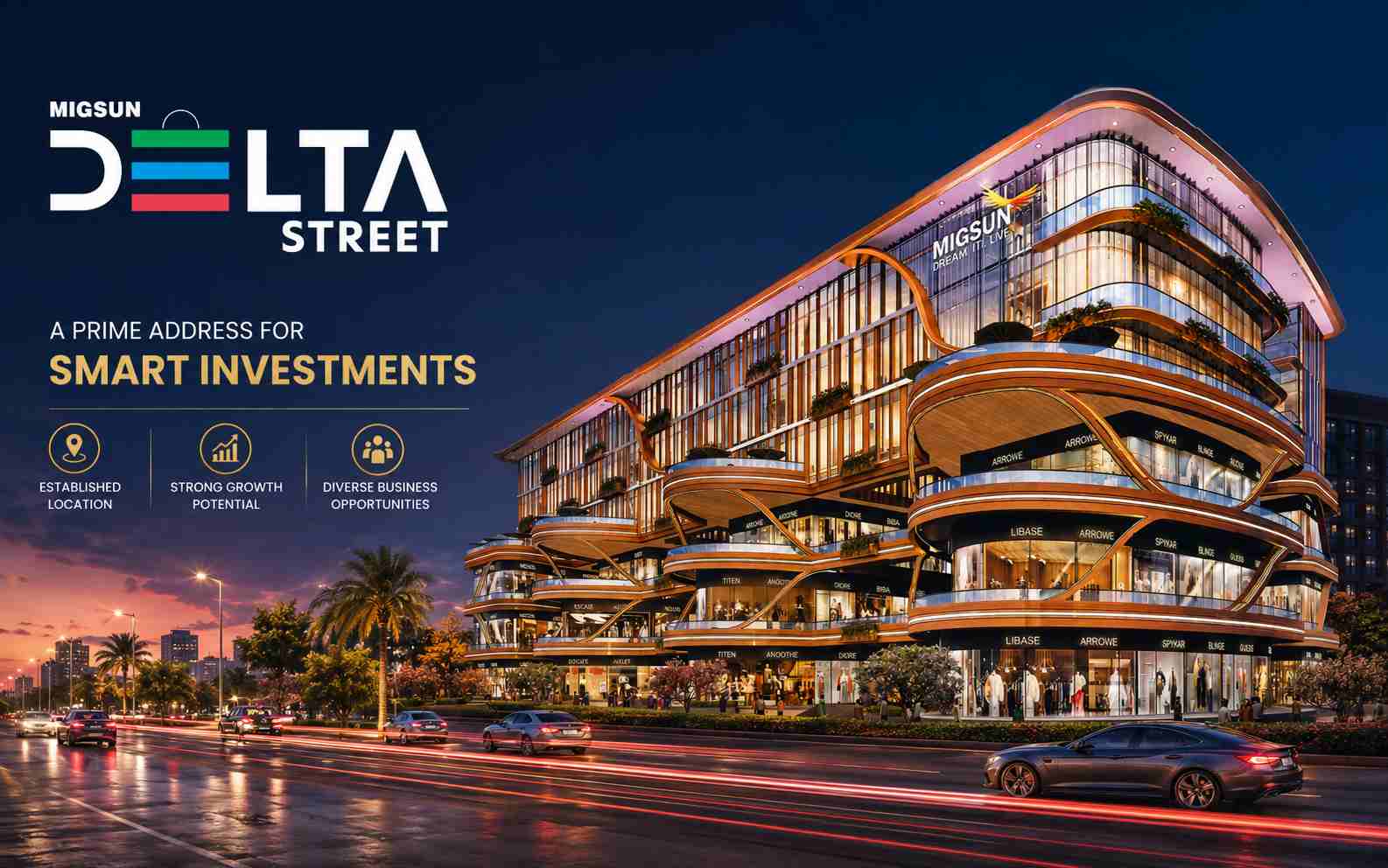
Among the newer commercial developments in Greater Noida, Migsun Delta Street has generated interest from both investors and business owners. The project aims to serve a growing urban population while offering spaces designed for retail, dining, and commercial activities. But does it deserve a place on an investor’s shortlist? Let’s take a closer look at the factors that matter.
Understanding the Importance of Location
In commercial real estate, location is often the single most important factor influencing success. A well-designed project may struggle if footfall remains low, while an average project can thrive when supported by strong surrounding demand.
Delta-2 is one of the established sectors of Greater Noida. Unlike emerging regions that rely heavily on future development promises, this area already benefits from a residential population, educational institutions, public infrastructure, and daily commuter movement. For businesses, this creates a ready customer base rather than a market that needs years to develop.
The presence of nearby residential communities can be particularly beneficial for retail outlets in migsun Delta Street, cafes, convenience stores, and service-based businesses. Regular demand generated by local residents often provides a more stable foundation than depending solely on destination visitors.
Accessibility and Connectivity
Connectivity plays a major role in determining commercial success. Customers prefer locations that are easy to reach, while businesses value accessibility for employees, suppliers, and visitors.
Greater Noida has witnessed significant infrastructure improvements over the past decade. Wide roads, metro connectivity, and links to major business corridors have improved mobility throughout the region. Commercial projects located near transportation networks often enjoy stronger visibility and higher visitor volumes compared to isolated developments.
For investors, accessibility contributes to long-term sustainability. Businesses are more likely to lease or purchase spaces in locations that offer convenience to their target audience.
The Growing Appeal of High-Street Retail
Consumer preferences have evolved considerably in recent years. While traditional shopping malls remain popular, high-street retail formats continue gaining traction in many urban areas.
High-street developments provide several advantages:
- Direct visibility from roads and pedestrian areas.
- Easier customer access.
- Lower dependence on anchor tenants.
- Greater flexibility for business owners.
- Better opportunities for local brands and entrepreneurs.
Projects built around this concept often attract a diverse mix of businesses, creating a more dynamic commercial environment. When properly planned, such developments can generate consistent activity throughout the day rather than relying on peak shopping hours alone.
Evaluating Demand Instead of Marketing Claims
One of the biggest mistakes investors make is focusing entirely on promotional material while ignoring actual demand drivers.
Before investing in any commercial property, it is essential to ask practical questions:
- Who will be the primary customers?
- What businesses are likely to operate there?
- Is there sufficient residential density nearby?
- Are competing commercial projects already serving the market?
- How sustainable is the demand over the next five to ten years?
A project’s success ultimately depends on businesses generating revenue. If businesses thrive, occupancy improves, rental demand increases, and property values may benefit over time.
Investors should therefore assess market fundamentals rather than relying solely on projected returns.
Potential Advantages for Investors: There are several factors that may make this type of commercial development attractive to investors.
Established Catchment Area: Many commercial projects struggle because they are launched in locations where population growth is still years away. In contrast, areas with an existing residential base can support business activity from the beginning.
A strong catchment area can help reduce the waiting period often associated with commercial investments.
Diverse Business Opportunities: Commercial spaces that accommodate multiple business categories generally attract a wider range of occupants.
Examples include:
- Restaurants and cafes
- Retail outlets
- Service providers
- Lifestyle brands
- Convenience stores
- Professional offices
Diversity can strengthen the overall ecosystem by reducing dependence on a single business segment.
Long-Term Urban Growth: Greater Noida continues to benefit from infrastructure expansion, educational institutions, employment hubs, and regional connectivity improvements.
As urban development progresses, commercial assets located in established sectors may gain additional relevance due to increasing consumer demand and business activity.
Risks Investors Should Not Ignore: Every investment opportunity carries risks, and commercial real estate is no exception.
Market Competition: Greater Noida has witnessed significant commercial development in recent years. New retail centers, mixed-use projects, and business hubs continue entering the market.
Increased supply can create competition for tenants and customers. Investors should evaluate nearby projects and understand how the property differentiates itself.
Occupancy Challenges: Rental projections often assume high occupancy levels. However, achieving those levels may take time.
Vacant units can impact returns and delay expected income generation. Investors should maintain realistic expectations regarding leasing timelines.
Economic Cycles: Commercial property performance is closely tied to business activity. Economic slowdowns can influence tenant demand, consumer spending, and rental growth.
A long-term investment perspective can help manage these fluctuations more effectively.
Who Might Consider This Type of Investment?
Commercial real estate is not suitable for every investor.
It may appeal to individuals who:
- Seek diversification beyond residential property.
- Have a medium- to long-term investment horizon.
- Understand market cycles.
- Are comfortable with potential vacancy periods.
- Prioritize location-driven opportunities.
On the other hand, investors looking for immediate rental income or guaranteed returns should carefully evaluate their expectations before committing capital.
Comparing Opportunity with Expectations
A common misconception is that every commercial project automatically delivers exceptional returns. In reality, outcomes depend on multiple factors including location quality, tenant demand, occupancy levels, and market conditions.
Rather than focusing solely on projected numbers, investors should compare the opportunity against their financial goals.
Questions worth considering include:
- Is the investment aligned with my risk tolerance?
- Can I hold the property for several years if required?
- Does the location have sustainable demand drivers?
- Are there alternative opportunities offering better value?
Thoughtful analysis often leads to better decisions than chasing advertised returns.
Final Verdict
It appears to benefit from several characteristics that investors typically look for in a commercial property: an established location, surrounding residential population, improving connectivity, and a retail-focused development model.
However, as with any commercial investment, success will depend less on promotional promises and more on actual business performance, occupancy levels, and market demand over time. Investors should evaluate Migsun Delta Street Greater Noida Project within the broader context of Greater Noida’s commercial landscape and consider both opportunities and risks before making a decision.
For those seeking exposure to commercial real estate in an established urban environment, the project may be worth exploring further. The key is to conduct thorough due diligence, verify project details, assess local demand, and align the investment with long-term financial objectives rather than short-term expectations.
Ultimately, the best commercial investment is not necessarily the one with the most aggressive marketing—it is the one supported by strong fundamentals, sustainable demand, and realistic growth potential.

All Categories
Recent Posts

What Makes Migsun Delta Street Retail Spaces Stand Out?
Is Migsun Delta Street Worth Considering for Commercial Investment?