How Daily Footfall Drives Commercial Success in Urban Corridors
Commercial real estate has changed dramatically over the last decade. Earlier, investors mostly focused on location names, road visibility, and rental assumptions while evaluating a project. Today, however, one factor plays a much bigger role in determining long-term commercial performance — daily footfall.
Whether it is a retail market, food court, studio space, or mixed-use commercial development, sustained visitor movement often becomes the foundation of long-term business success. In rapidly developing urban corridors, projects that successfully attract regular consumer activity generally create stronger commercial ecosystems over time.
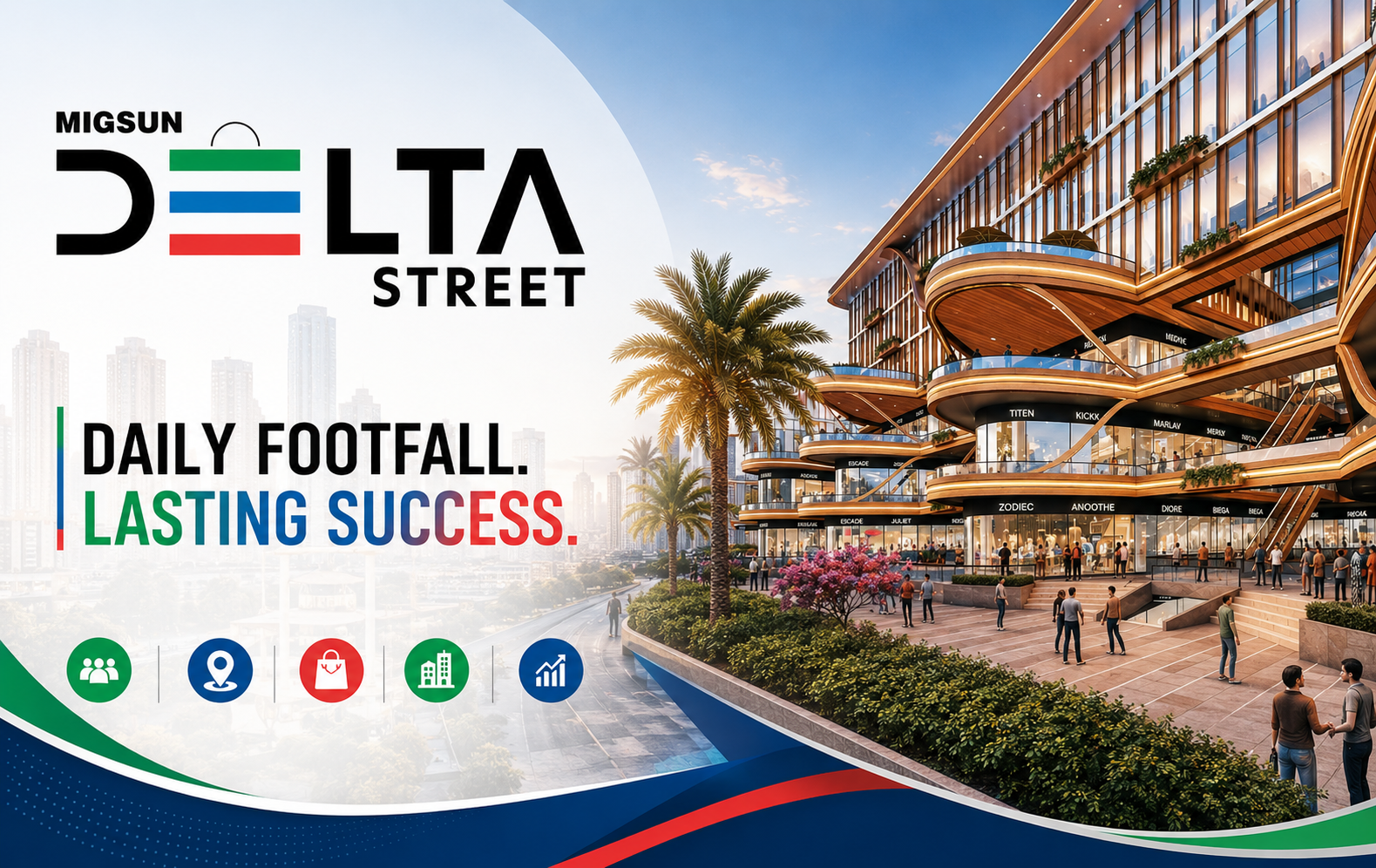
This shift is becoming increasingly visible across emerging regions of NCR, especially in planned sectors of Greater Noida where infrastructure, residential expansion, and organized commercial developments are growing together. Projects like Migsun Delta Street are part of this broader transformation where developers are not only creating retail spaces, but attempting to build environments capable of generating recurring urban activity.
Why Footfall Matters More Than Just Location
A commercial project may have premium construction, modern architecture, and attractive layouts, but without consistent consumer movement, long-term sustainability becomes difficult. Daily footfall creates the ecosystem that allows retail stores, cafés, service brands, and business spaces to function effectively.
Modern investors understand that commercial success depends heavily on how frequently people engage with a property throughout the day. This is why mixed-use projects located near residential communities, educational institutions, offices, and transportation corridors often perform more consistently compared to isolated retail buildings.
The growing attention around Migsun Delta Street reflects this market understanding. The project is situated within a region where residential density and urban infrastructure are continuously expanding. As sectors around Delta 2 evolve further, commercial developments positioned within these growth zones naturally become part of everyday consumer movement.
The Rise of Organized Commercial Corridors in Greater Noida
Greater Noida was originally developed with a planned urban structure, which gives several sectors a long-term infrastructure advantage compared to many older city markets. Wide roads, sector-based planning, improving metro connectivity, and expanding residential catchments have gradually created favorable conditions for organized commercial growth.
This is one reason why high-street retail and integrated commercial developments are receiving stronger investor attention across the region.
Unlike traditional standalone shops, modern projects attempt to combine multiple business categories within a single destination. Retail spaces, food zones, entertainment-driven formats, and flexible studio concepts together help create a more dynamic environment where visitors spend more time and return more frequently.
The demand for organized commercial ecosystems is also being shaped by changing consumer behavior. Urban buyers today prefer convenience-driven environments where shopping, dining, services, and business interactions can happen within one accessible location.
This evolving preference supports the long-term relevance of developments such as Migsun Delta Street Greater Noida, where the focus extends beyond basic retail infrastructure.
Retail Activity and Consumer Engagement
One of the biggest reasons why footfall directly impacts commercial value is because businesses depend on visibility and recurring engagement. A retail store operating inside a high-activity environment generally has stronger opportunities for customer acquisition compared to businesses located in low-movement areas.
This principle applies not only to retail shops, but also to food courts, cafés, lifestyle brands, and service-oriented businesses.
The increasing popularity of integrated concepts like Migsun Delta Street Food Court reflects this larger commercial trend. Food and lifestyle spaces have become major footfall generators in modern commercial projects because they encourage repeat visits and longer customer interaction periods.
In many urban developments, food-oriented zones often become the social center of the property. Visitors may initially arrive for dining experiences, but eventually interact with surrounding retail and service businesses as well. This interconnected ecosystem creates a more sustainable commercial environment over time.
For this reason, developers are increasingly prioritizing mixed-use planning rather than relying solely on traditional retail models.
The Role of Residential Catchment in Commercial Sustainability
No commercial corridor can grow consistently without a surrounding consumer base. Daily footfall is closely connected to residential movement because local populations create recurring demand for shopping, dining, wellness services, convenience retail, and professional spaces.
Delta 2 in Greater Noida has gradually emerged as one of the locations benefiting from expanding residential activity and improving urban infrastructure. As more families and professionals move into nearby sectors, the need for organized commercial destinations naturally increases.
This relationship between residential growth and commercial activity is critical in understanding why projects like Migsun Delta Street Commercial Property are attracting attention from investors looking for long-term positioning rather than only immediate returns.
Commercial ecosystems become stronger when people interact with them regularly as part of their everyday lifestyle. This is why developments integrated within growing urban corridors often generate more sustainable activity than projects located in isolated zones.
Studio Spaces and the Evolution of Commercial Usage
Another trend influencing modern commercial real estate is the growing popularity of compact business-oriented spaces and flexible studio formats. Urban work culture is changing rapidly, especially with the rise of startups, digital businesses, consultants, remote professionals, and entrepreneurial ventures.
This has increased interest in concepts like Migsun Delta Street Studio Apartments and commercial studio spaces within integrated developments.
Modern buyers are no longer viewing studio-oriented commercial spaces only as traditional office assets. Instead, they are being considered for flexible professional usage, client interaction, business operations, and investment diversification.
The advantage of such formats inside mixed-use developments is that they benefit from the same ecosystem supporting retail and food-based activity. Visitor movement, accessibility, and integrated infrastructure together contribute toward stronger long-term usability.
As Greater Noida continues evolving into a more active urban business environment, flexible commercial spaces are expected to remain an important part of future development trends.
Consumer Psychology and Modern Commercial Projects
Commercial success is influenced not only by infrastructure but also by perception. Consumers tend to visit destinations that feel active, accessible, and socially engaging. A vibrant commercial environment naturally attracts more businesses, which in turn increases visitor movement even further.
This cycle is what eventually transforms a developing project into an established commercial destination.
Projects that successfully create organized environments with balanced retail planning, movement flow, and integrated amenities often generate stronger long-term visibility. Investors increasingly recognize that footfall is not accidental; it is usually the result of location planning, surrounding density, accessibility, and ecosystem development.
The growing discussion around Migsun Delta Street Reviews, project visibility, and commercial interest reflects how buyers are now evaluating projects beyond simple price considerations.
The Future of Urban Commercial Corridors
As cities continue expanding, commercial growth is increasingly shifting toward planned urban corridors where infrastructure and residential activity evolve simultaneously. Greater Noida represents one of the clearest examples of this transition within NCR.
The future of commercial real estate may depend less on isolated landmark buildings and more on integrated ecosystems capable of generating consistent urban movement. Retail shops, food zones, studio spaces, and service businesses now function best when supported by strong daily engagement from surrounding communities.
Projects like Migsun Delta Street are emerging during this broader transformation where developers are attempting to align commercial spaces with modern lifestyle patterns and changing consumer expectations.
Ultimately, daily footfall is more than just a metric. It represents economic activity, consumer confidence, business sustainability, and urban momentum. In developing commercial corridors, that movement often becomes the strongest indicator of long-term success.

All Categories
Recent Posts
The Rise of Mixed-Use Commercial Destinations in Greater Noida
Retail Shops, Studio Apartments & Food Lane Investment Opportunity